These are the most conservative colleges in America
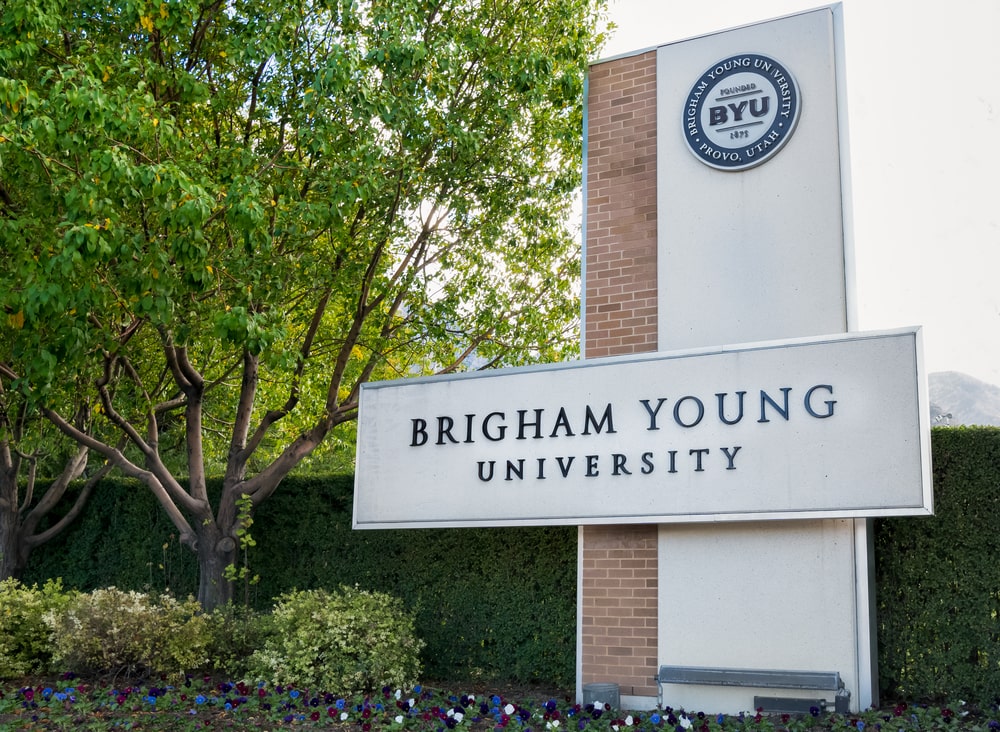


The most conservative colleges in America are Brigham Young University, Liberty University, and Bob Jones University – but are they worth it?
Not all conservative colleges are a good deal – so don’t choose a school based only on ideology.
The best value conservative colleges are Missouri University of Science and Technology, Brigham Young University, and Texas A&M University, College Station.
www.degreechoices.com is an advertising-supported site. Featured or trusted partner programs and all school search, finder, or match results are for schools that compensate us. This compensation does not influence our school rankings, resource guides, or other editorially-independent information published on this site.
As a conservative, going to a college where most people think like you has its appeal. While some may claim that intellectual diversity is an essential part of your college experience, you might not be so thrilled when your Marxist English professor docks you points for disagreeing with him in class.
But picking a school based on your ideological preferences alone leaves out 1 crucial variable from the college choice equation.
Money.
Frugality is a core conservative value, and the Republican Party prides itself on being friendly to business. So, as a savvy individual who understands the value of a hard-earned dollar, why not think like an investor about your college education?
To help you make the most out of your college investment – and avoid excessive student debt – we analyzed whether the nation’s most conservative colleges (as per Niche) are really worth it, using our own methodology, and then ranked them by value for money.
The 30 most conservative colleges in America
According to Niche, which publishes student reviews of schools, the most conservative colleges in America are Brigham Young University (Provo), Liberty University, and Bob Jones University.
To make the list, Niche surveyed real students and asked them to rate how conservative their college is based on their own political leanings (80%) and the perceived political leanings of their peers (20%).
The most conservative colleges are predominately private religious institutions, although there are several notable state universities thrown into the mix as well. Unsurprisingly, they are mostly located in red states:
- Brigham Young University
- Liberty University
- Bob Jones University
- Cedarville University
- Brigham Young University – Idaho
- Grove City College
- Southern Methodist University
- Colorado Christian University
- North Greenville University
- Utah State University
- Maranatha Baptist University
- Biola University
- Texas A&M University
- Dallas Baptist University
- Harding University
- Samford University
- Abilene Christian University
- Lee University
- Missouri University of Science and Technology
- The University of Alabama
- Auburn University
- Texas Christian University
- University of Wyoming
- Ouachita Baptist University
- Wayne State College
- George Fox University
- Southeastern University
- University of Tennessee at Martin
- University of Arkansas
- Troy University
How do conservative schools perform compared to other colleges?
So, are these super-conservative colleges worth the tuition? Or are students paying a premium for ideology that doesn’t pay off later?
To find out, we turned to our signature methodology for ranking degrees. Our unique formula uses government data on average net (school) costs and average earnings 10 years after enrollment (whether or not the student graduated) to generate an Economic Score (the lower the better). Data is sourced from IPEDS and College Scorecard.
Our methodology rewards colleges that combine affordability with high salaries down the line.
» Also read: The states with the most student debt could surprise you.
We found that economically speaking, the 50 most conservative colleges perform a bit worse than the national average. They have a mean Economic Score of 4.07, compared to 3.78 nationwide. In total, 21 of Niche’s 50 most conservative colleges – a little less than half – performed better than the U.S. average in terms of value for money.
One reason for this is that many of the more conservative colleges are private religious institutions and more expensive than public universities. Even though most private colleges offer scholarships and financial aid, this doesn’t normally offset higher tuition prices.
In general, public universities are typically a much better deal than private ones, regardless of how conservative or liberal they are.
Liberal vs conservative colleges
Interestingly, the 50 most liberal colleges (also according to Niche) have an average economic score of 4.01, which is practically identical to the average for the most conservative colleges.
However, the most liberal colleges in the U.S. are more of a mixed bag. They include slightly more excellent as well as terrible schools (the worst offenders are art schools) in terms of value.
There was less extreme variation among the most conservative colleges.
» Also read: The truth about the most expensive colleges in the U.S.
The 25 best conservative colleges – by value for money
Not all conservative colleges are a rip-off. Far from it — plenty of right-leaning institutions provide a pretty solid return on educational investment.
Below, you’ll find a list of the conservative colleges that are the “best deal”. We took the 50 most conservative colleges, according to Niche, and ordered them by value for money, using our ranking methodology.
By this metric, the best conservative colleges are Missouri University of Science and Technology, Brigham Young University Provo (immediately followed by BYU Idaho), and Texas A&M University, College Station.
2 colleges on Niche’s list – Moody Bible Institute and Grove City College – do not disclose enough information on graduate earnings for us to rank them properly.
What are the worst conservative colleges by value for money?
According to our methodology, the worst conservative colleges by value for money are:
- Southeastern University (ES 8.96)
- Liberty University (ES 8.08)
- DeVry University, Illinois (ES 6.36)
- Biola University (ES 6.26)
- Colorado Christian College (ES 6.06)
These conservative colleges offer terrible value for money, meaning students pay steep tuition prices, resulting in a heavy student loan burden, and don’t earn enough after graduation to pay them back quickly — putting borrowers at risk of default.
» Also read: The worst colleges in the U.S.
Advantages of studying at a conservative college
Whether or not they’re a good deal economically, there are several advantages of studying at a conservative college.
- Shared values. Many conservative students feel more comfortable in an environment where the student body shares traditional values and ethics.
- A sense of community. A shared worldview can foster a sense of community, especially at smaller private schools.
- Emphasis on tradition. Conservative colleges may place a high value on academic traditions and classical education.
- Clear more and ethical framework. Many conservative colleges have an honor code students must follow. This can contribute to a sense of structure and purpose for students who appreciate such guidelines.
Final thoughts
If you want to go to a conservative college without graduating with toxic debt you can’t pay off, your best bet is a public research university in a red state like Utah, Oklahoma, Texas, and Missouri.
Remember that education is an investment. At the end of the day, your degree should unlock earnings high enough to pay back the loans you’ve taken out to cover tuition.
www.degreechoices.com is an advertising-supported site. Featured or trusted partner programs and all school search, finder, or match results are for schools that compensate us. This compensation does not influence our school rankings, resource guides, or other editorially-independent information published on this site.
Did you enjoy this post?
Related Articles
Continue with these related posts, or visit our blog for comprehensive guides on everything from choosing the right degree to mapping out a career path in your field.